
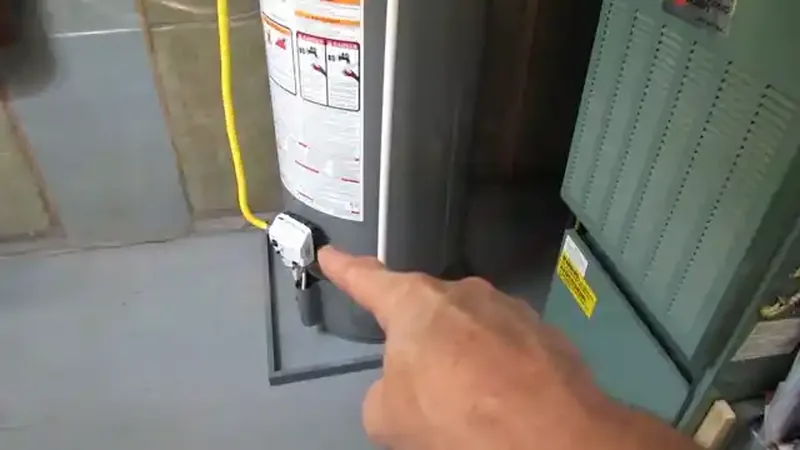
A water heater leak in a Longmont basement is worth taking seriously on the day it is discovered. The leak itself may be small initially, but the causes behind it, a corroding tank, a failed pressure relief valve, a deteriorating connection at the cold inlet or hot outlet, are not self-correcting. Left alone, what starts as a slow seep from a fitting can progress to tank failure and significant basement flooding.
Longmont's medium-hard St. Vrain surface water is the primary accelerant for tank interior corrosion. The water's mineral content deposits scale on the anode rod, consuming it faster than it would in softer water. When the anode rod is fully depleted, the tank wall becomes the sacrificial element. In homes with whole-house softeners, the softened water can actually accelerate anode rod consumption through a different mechanism. Either way, tank condition in Longmont deserves more frequent attention than manufacturers' generic maintenance schedules assume.
Where Water Heater Leaks Come From
The temperature and pressure relief valve, located on the side of the tank, is required by Colorado code and opens automatically if the tank pressure or temperature exceeds safe limits. A valve that weeps or drips periodically is not a minor nuisance; it indicates either that the valve is failing or that the tank is actually over-pressurizing, which is a safety concern. A pressure regulator valve issue on the main house supply can cause the water heater to cycle into over-pressure repeatedly.
The cold inlet and hot outlet connections at the top of the tank use dielectric unions in most Longmont installations, intended to prevent galvanic corrosion between the copper supply lines and the steel tank fittings. Those unions have a finite service life, and in homes where they were installed with the original tank fifteen or twenty years ago, failure at the union is a common source of the slow drip that appears on the floor beneath the tank.
Repair vs. Replacement Decision
We evaluate tank age, anode rod condition (when accessible), the location of the leak, and water quality history before recommending repair or replacement. A failed fitting on a seven-year-old tank in otherwise good condition is a repair. A slow seep from the tank base on a fifteen-year-old unit in a hard-water installation typically argues for replacement; the seep from the base indicates that the tank wall itself is compromised, and no fitting repair will address it.
We serve all Longmont neighborhoods for water heater leak assessment, including Southmoor Park, Westview, and the adjacent communities of Berthoud and Mead.
Frequently Asked Questions
Why is Longmont's water hard on water heaters?
The city's medium-hard St. Vrain surface water deposits scale on the anode rod and tank interior. Scale consumes the anode rod faster than in soft-water areas, and once the anode is depleted, the tank wall becomes the sacrificial element. Longmont water heater tanks benefit from more frequent anode rod inspection than manufacturer schedules typically assume.
My T&P relief valve is dripping. Is that serious?
Yes. A dripping T&P valve indicates either that the valve itself is failing open, or that the tank is over-pressurizing and the valve is doing its job. Either condition requires immediate attention. An over-pressurizing tank with a failed relief valve is a safety hazard. Call (303) 552-3896 the same day.
Should I repair my water heater or replace it?
A failed fitting on a unit under ten years old is typically a repair. A seep from the tank base on a unit over twelve years old in Longmont's medium-hard water environment usually argues for replacement; the tank wall itself is compromised. We give you the honest assessment on-site before any work begins.