
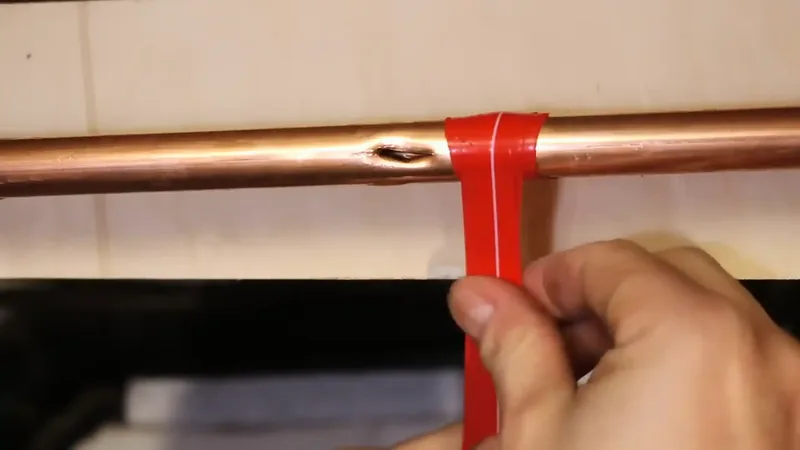
A pipe leak anywhere in a Longmont home's water supply system is a pressurized failure, which means water is actively escaping at line pressure until the supply is shut off. Unlike a drain leak that releases water only when a fixture is in use, a supply line failure runs continuously. At Longmont's typical residential water pressure of 60 to 80 PSI, even a small crack in a 3/4-inch line can deliver significant water volume into a wall cavity, floor joist bay, or under a concrete slab within hours.
The first action on any supply pipe leak call is identifying and closing the nearest isolation valve upstream of the failure. For homeowners who are not sure where their main shut-off is located, we walk through it on the phone before arriving. The City of Longmont water meter box at the curb contains a shut-off that is accessible with a standard meter key; we carry one on every truck.
Pipe Materials in Longmont by Housing Era
The pipe material in a Longmont home predicts the most likely failure mode. Homes built before 1960 in Old Town and Loomiller typically used galvanized steel supply lines. Galvanized pipe fails through progressive internal corrosion that narrows the bore, reduces flow pressure, and eventually produces joint failures at the threaded connections rather than mid-pipe splits. Homes built from the 1960s through the 1990s used copper supply lines. Copper fails through pinhole corrosion accelerated by St. Vrain surface water scale. Homes built after 2000 in Prospect New Town and Renaissance typically used PEX, which fails at fittings and clamps rather than mid-tube.
Detection and Repair
For active failures that can be heard, acoustic detection narrows the location to the specific wall or floor section before we open anything. For slow failures where the homeowner noticed an elevated bill but cannot hear the leak, we perform a pressure test: isolate sections of the supply system and observe pressure decay to identify which zone has an active failure. This avoids opening walls speculatively across multiple rooms.
Repair options range from spot-coupling a single crack, to rerouting a deteriorated run through an accessible wall path, to repiping the full supply system in copper or PEX if the existing pipe cohort is sufficiently aged. We serve all Longmont neighborhoods and adjacent communities including Dacono and Platteville.
Frequently Asked Questions
What should I do first when a pipe bursts in my Longmont home?
Shut off the nearest upstream isolation valve. If you cannot locate it, the main shut-off is at the City of Longmont water meter box at the curb, accessible with a standard meter key. We walk through the shut-off location with every caller before dispatch. Then call (303) 552-3896 immediately.
What pipe material do most Longmont homes have?
Homes built before 1960 in Old Town and Loomiller typically have galvanized steel. Homes built from the 1960s through the 1990s across the city have copper. Homes built after 2000 in Prospect New Town and Renaissance typically have PEX. Each material has a distinct failure profile that guides the detection and repair approach.
Can you find a pipe leak without opening the wall?
In most cases, yes. Acoustic detection locates the pressurized failure point inside a wall or floor cavity. Thermal imaging maps the wet zone. We open a single targeted access panel rather than speculative demolition across multiple wall sections.