
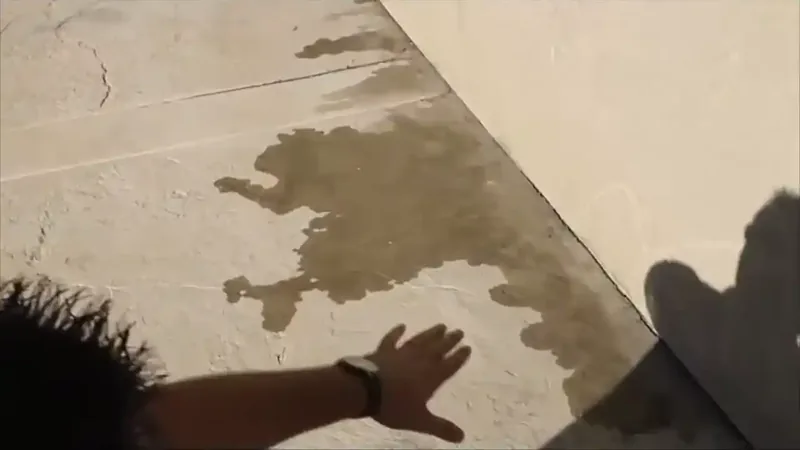
A slab leak is a break in a pressurized supply line or a drain line running beneath the concrete foundation of a Longmont home. Because the pipe is encased in or runs directly under several inches of concrete, the water has nowhere immediate to go. It saturates the soil, wicks upward through the slab, and eventually announces itself through a warm spot on the floor, a water bill that jumped with no change in household habits, or the faint sound of flowing water when every tap is off.
Longmont's bentonite expansive clay is a primary accelerant. This Front Range soil swells when saturated during spring snowmelt and contracts during dry months, exerting cyclical lateral and vertical pressure on slab-embedded copper lines. Homes in Loomiller and Mill Village, built in the 1950s and 1960s, carry the oldest residential copper in Longmont. Those lines have been through fifty or more annual wet-dry cycles. Homes in Spring Valley and Quail Crossing, developed in the 1980s and early 1990s, are entering the period when copper pinhole failures become statistically likely, particularly where medium-hard St. Vrain surface water has been scaling the pipe interior for decades.
How We Detect Slab Leaks in Longmont
Detection comes before demolition on every call. We carry acoustic ground microphones that detect the sound signature of pressurized water escaping through a crack, even when the pipe sits six inches below a finished concrete floor. We supplement acoustic work with thermal imaging, which captures the temperature differential where a hot-water slab line bleeds heat upward through the concrete. Between these two methods, we can typically narrow the leak to within a foot of its actual location before any concrete is broken.
For lines under finished basements in Longmont, that precision matters. A acoustic leak detection call that locates the break accurately means one targeted saw cut rather than exploratory trenching across a tile floor. For underground water service lines from the meter box to the foundation, we can add tracer gas injection to detect the exit point above soil.
Slab Leak Repair Options
Once located, we review three repair paths with you. The right choice depends on the pipe material, the age of the line, and how many sections of the line already show wear.
| Repair Option | Best For | Disruption Level | Typical Lifespan |
|---|---|---|---|
| Spot repair (break & access) | Single isolated failure in otherwise sound line | One targeted saw cut | Repair site; rest of line continues aging |
| Reroute (abandon & bypass) | Accessible wall or ceiling path available | Minimal concrete work; drywall patch | Life of the new pipe material |
| Epoxy pipe lining | Line is still structurally intact, narrowed by corrosion | No concrete demolition | 50+ years for the lining |
| Full repipe (whole-house) | Multiple failing sections, galvanized or severely corroded copper | Wall-by-wall over several days | 50+ years for new PEX |
Signs You Have a Slab Leak in Your Longmont Home
- Water bill from City of Longmont jumped with no change in household usage
- Warm or hot patch on the floor, particularly between the water heater and a bathroom
- Sound of water running when all taps are closed
- Damp carpet or buckling hardwood floor in a ground-floor room
- Mold smell from a finished basement with no obvious water source
- Dial on the water meter still turning with all indoor fixtures off
Serving Longmont Neighborhoods for Slab Leak Work
We cover all of Longmont for slab leak detection and repair. Homes in Old Town Longmont often have mixed plumbing systems where cast iron drains meet galvanized supply lines from the colony era. Newer homes in Prospect New Town use PEX supply lines that resist corrosion, but their slab-crossing fittings and the irrigation mainlines under the yard are still worth monitoring.
Adjacent communities including Niwot and Frederick are also served for slab leak detection. Each area carries its own soil and construction profile, and we adjust the detection method accordingly.
Frequently Asked Questions
How do you know if you have a slab leak in Longmont?
Common signs include a water bill that spiked with no usage change, a warm or hot spot on the floor, the sound of running water when all fixtures are off, and a water meter that still moves with everything closed. We confirm with acoustic and thermal detection before any concrete is touched.
Does Longmont's bentonite clay make slab leaks worse?
Yes. Bentonite soil expands with spring snowmelt and contracts in dry months, exerting cyclic pressure on slab-embedded copper lines. This repeated mechanical stress is the primary driver of premature pinhole failure in Longmont's 1970s and 1980s copper systems.
Can you fix a slab leak without breaking up the floor?
In many cases, yes. Line rerouting through an accessible wall path avoids the slab entirely. Epoxy lining treats the interior of the existing pipe without demolition. We always present the non-demolition options before recommending a saw cut.