
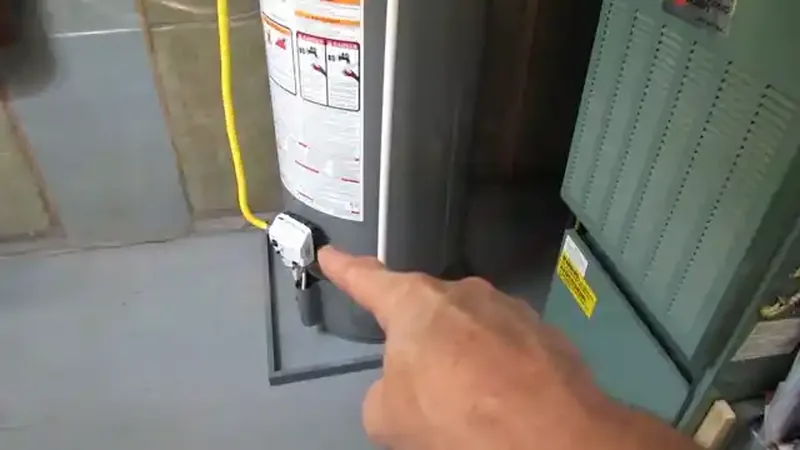
You noticed a small puddle on the basement floor around the base of the water heater, or a slow drip from one of the supply connections at the top of the tank. The question every Longmont homeowner asks at that point is: is this worth repairing, or is it time to replace the unit? The answer depends on where the leak is coming from and how old the water heater is. Here is how to work through that decision.
Where the Leak Is Coming From Matters More Than the Drip Rate
A water heater has several places where water can exit. The temperature and pressure relief valve on the side of the tank is designed to weep water when the tank over-pressurizes or over-heats. A T&P valve that drips occasionally may indicate the valve is failing and needs replacement, or it may indicate that the tank itself is cycling to over-pressure due to a failed pressure regulator valve on the main supply. Both are fixable without replacing the tank if the tank itself is sound.
The cold inlet and hot outlet connections at the top of the tank use dielectric unions that prevent galvanic corrosion between the copper supply lines and the steel tank threads. Those unions have a finite life, typically fifteen to twenty years in Longmont's medium-hard water environment. A drip from the union fitting at the top of the tank is a repair, not a replacement indicator, when the tank itself is under twelve years old and in otherwise good condition.
A seep from the base of the tank is a different situation. The tank base sits in a tray, and moisture in the tray usually means the tank wall itself has corroded through at the bottom, or that the anode rod depletion has allowed the tank floor to begin pitting. A bottom seep on a tank over twelve years old in Longmont's water environment is almost always a replacement indicator. No fitting repair addresses a failed tank wall.
The Anode Rod Factor in Longmont
Water heater tanks contain a sacrificial anode rod, typically magnesium or aluminum, designed to corrode in place of the steel tank wall. In Longmont's medium-hard St. Vrain surface water, the anode rod is consumed at a moderate rate: faster than in very soft water, slower than in very hard water. Most standard anode rods are designed for an eight-to-twelve-year life. A tank whose anode rod was never inspected or replaced past the twelve-year mark is likely running on bare steel at the most exposed sections of the tank interior.
Repair vs. Replace: The Longmont Decision Tree
| Leak Source | Tank Age Under 12 Yr | Tank Age Over 12 Yr |
|---|---|---|
| T&P valve dripping | Replace valve; check PRV | Replace valve + assess tank; consider replacement |
| Top fitting (union) drip | Replace dielectric union | Replace union; assess remaining tank life |
| Tank base / floor seep | Replace tank immediately | Replace tank immediately |
| Flue collar (gas units) | Repair collar | Assess full unit; likely replacement |
We assess on-site before recommending any work. If a fitting repair is the right answer, we say so. If a twelve-year-old tank with a bottom seep needs replacement, we say that too. Call (303) 552-3896 to schedule a water heater assessment in Longmont.