
The phrase non-invasive leak detection describes a specific approach to finding water leaks: use instruments to locate the failure before cutting, drilling, or demolishing anything. In the context of a Longmont home with a suspected slab leak under a finished tile floor, or a pinhole in a copper supply line inside a finished wall, the difference between invasive and non-invasive detection is the difference between one targeted repair cut and weeks of demolition and reconstruction.
What Non-Invasive Detection Actually Involves
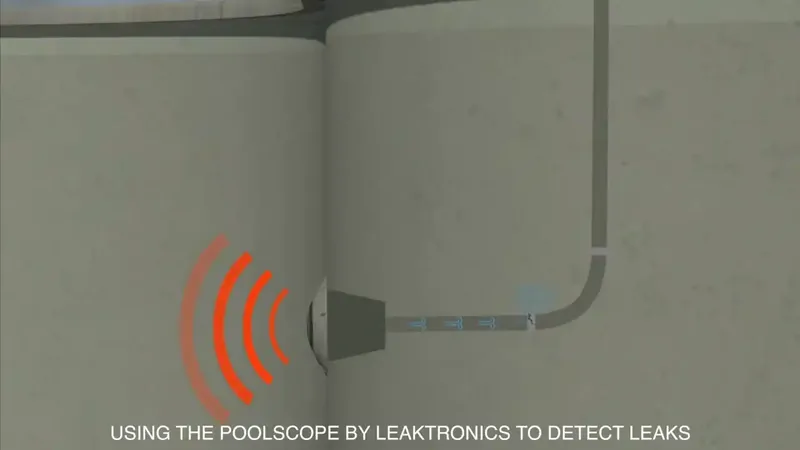
Non-invasive leak detection uses two primary instrument types. The first is acoustic detection equipment: sensitive microphones, typically contact probes placed on the floor surface or against a wall, that amplify the sound produced when pressurized water escapes through a failure point. The escape sound is distinct from ambient building noise and can be heard through several inches of concrete, finished flooring, and drywall.
The second is thermal imaging: an infrared camera that maps surface temperature differences. A leaking hot-water supply line heats the concrete or drywall above it. A leaking cold-water line cools the surface where the water spreads. The camera produces a color-coded temperature map showing where the wet zone extends, allowing the detection technician to identify the search area before applying acoustic probes for precise location.
Some situations also call for tracer gas injection: filling the supply line with a helium-nitrogen gas mixture and using a gas detector at the surface to find where the gas exits through the failure point. This method works for deeply buried lines where both acoustic and thermal signals are too attenuated to be useful.
What Non-Invasive Detection Saves in a Longmont Home
Consider a slab leak under a finished tile bathroom floor in a Twin Peaks home. Without non-invasive detection, the investigation might require lifting and disposing of a full bathroom worth of tile, grinding through the slab in a search pattern, and testing each exposed section until the failure is found. That is $3,000 to $8,000 of tile demolition and floor reconstruction on top of the plumbing repair.
With acoustic and thermal detection, the failure point is located to within 12 to 18 inches before any tile is touched. The access cut is one targeted section of tile, one saw cut in the concrete, one repair, one re-pour, and one tile patch. The non-invasive detection cost is typically $300 to $600, and it saves ten times that in unnecessary demolition. The math is not complicated, which is why we perform detection before cutting on every call.
When Non-Invasive Detection Has Limits
Non-invasive detection works best when the supply line is under pressure and the leak is active. A line that has been shut off for investigation produces no acoustic signal. In those cases, we may restore pressure briefly to generate a detectable signal, then close the supply again. Thermal imaging also requires a meaningful temperature differential between the leaked water and the surrounding material; for cold-water line failures in a cool basement, the thermal signal is minimal, and acoustic detection carries most of the diagnostic weight.
These are technical considerations that our plumbers manage on every call. The principle is unchanged: find first, cut second. Call Longmont Leak Repair Pros at (303) 552-3896 to schedule non-invasive leak detection anywhere in Boulder County.